July 26th, 2021
Former HIU researcher Dr. Christian Baur was honored with the Ulm Doctoral Prize on the anniversary of Ulm University on July 16, 2021. As the best graduate of the Faculty of Natural Sciences, Baur attended the virtual event live from Copenhagen, where he recently started a new position.
Dr. Christian Baur, who worked for the HIU research group Solid-State Chemistry, completed his doctoral thesis on “Li-rich Disordered Rock Salt Transition Metal Oxyfluorides as Novel Cathode Materials in Lithium-Ion Batteries.” His work was already highly rated (“Mit Auszeichnung”) during his defense by an unanimous vote of the reviewers and examiners.
In his work, Baur carried out fundamental studies on the structure and understanding of the new and promising material class of disordered table salt structures and published his results in 10 articles in international peer-reviewed journals, including high-ranking journals such as Chem. Mater., J. Mater. Chem. A, ACS Materials & amp; Interfaces, The Journal of Phys. Chemistry C and Dalton Transactions.
What distinguished his work, among other things, was the consistent pursuit of demanding questions, for which he always purposefully, independently and creatively looked for the best possible solution. This led to the fact that he was able to inspire international cooperation partners in the field of theory and experiment for his questions and he was able to successfully familiarize himself with the difficult subject of X-ray structure analysis using “total scattering” on powders during a stay of several months at the DTU in Denmark.
His great care paid off, especially when analyzing a large amount of data. The data used by him reflect the changing disorder when loading and unloading the material and provide important information about the general lithium storage mechanism of oxyfluoride materials with disordered table salt structures. As a new class of compounds, these structures are particularly interesting because lithium can be stored in them in a very dense form, with it being surprisingly mobile in the structure, which also manages without the use of cobalt.
Weiterführende Informationen:
https://www.uni-ulm.de/jahrestag2021
https://www.uni-ulm.de/universitaet/hochschulkommunikation/veranstaltungen/jahrestag/54-jahrestag-2021/
https://magazin.minq-media.de/wp-content/uploads/2021/07/Einladung_54Jahrestag_UUlm-1-.pdf
July 2nd to July 11th 2021
A central point for innovation enthusiasts is being set up in the middle of Ulm as part of the Berblinger anniversary. In the summer of 2021 (July 2nd to July 11th, 2021), the city of Ulm, together with Ulm Battery Research Institutes and the Swedish car manufacturer Volvo, invites the public to exchange ideas about mobility and future topics on Hans-und-Sophie-Scholl-Platz.
On the occasion of the 10th anniversary of the Helmholtz Institute Ulm (HIU), numerous HIU scientists will give various lectures on the subject of battery research, innovative energy storage systems and the “future of mobility”. These will be broadcasted externally and via a live stream. The scientific lectures take place just a few hundred meters from the urban M25 exhibition center, in which the exhibition “AKKU ALLE – Energy Storage and Electromobility” takes place.
Venue: Hans-und-Sophie-Scholl-Platz, 89073 Ulm
Organizers: Cultural Department of City of Ulm, Helmholtz Institute Ulm, VOLVO in cooperation with Agency Do it!
Press Release: HIU Scientists present Battery Talks in Ulm City Centre
Series: The Talks shown here may still change slightly.
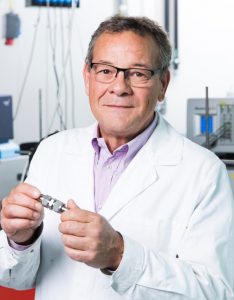
Presentation/Talk: July 3rd, 2021
Research on Fuel Cells
Speaker: Dr. Ludwig Jörissen (Zentrum für Sonnenenergie- und Wasserstoff-Forschung Baden-Württemberg)
Time: 02:00-03:00 PM
Presentation/Talk: July 5th, 2021
Batteries for Electromobility
Speaker: Prof. Dr. Maximilian Fichtner (Helmholtz Institute Ulm)
Topic: The development of batteries for electric vehicles is currently making leaps and bounds. In the lecture, new types of vehicle batteries will be presented, which enable greater ranges with a more sustainable material composition.
Time: 05:00-06:00 PM
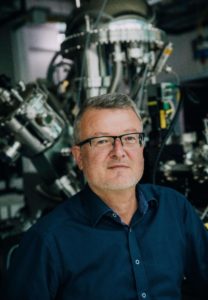
Presentation/Talk: July 6th, 2021
Hydrogen in Electromobility & Energy Transformation
Speaker: Prof. Dr. Markus Hölzle (Zentrum für Sonnenenergie- und Wasserstoff-Forschung Baden-Württemberg)
Topic: How a CO2-neutral Germany can be achieved with green electricity and green hydrogen is highlighted by Prof. Dr. Markus Hölzle (ZSW board member) in his talk. The focus is on the key technologies for the emission-free mobility of the future: lithium-ion batteries and fuel cells.
Time: 05:00-06:00 PM
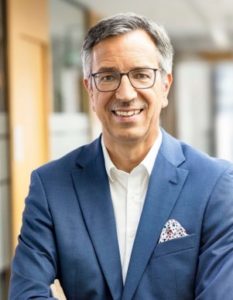
Presentation/Talk: July 7th, 2021
10 years of electromobility at SWU: Current projects and developments
Speaker: Ernst Hönig (SWU)
Topic: Numbers, data, facts, from the pioneering phase to the upcoming mass market. Insight into e-car sharing swu2go and other current projects.
Time: 05:00-06:00 PM
Presentation/Talk: July 8th, 2021
Battery research in Ulm: 10 years of the Helmholtz Institute Ulm (HIU)
Speaker: Dr. Heribert Wilhelm (Helmholtz Institute Ulm)
Topic: High-performance and sustainable batteries are essential for the establishment of electromobility and the success of the energy transition. The fundamentals of the future energy storage devices required for this are being researched at the HIU.
Time: 12:00-01:00 PM
Presentation/Talk: July 9th, 2021
Batteries in Electric Vehicles
Speaker: Dr. Dominic Bresser (Helmholtz Institute Ulm)
Topic: The range, quick charging capability and the price of e-vehicles largely depend on the battery. This lecture offers a general introduction as well as an overview of current and possible future developments.
Time: 12:00-01:00 PM

Presentation/Talk: July 9th, 2021
Sustainale Future Batteries
Speaker: Prof. Dr. Axel Groß (Helmholtz Institute Ulm)
Topic: Sustainable future batteries are based on a chemistry as Li-ion batteries. In the lecture it will be discussed why, despite the existing advantages, they have so far only prevailed selectively.
Time: 05:00-06:00 PM
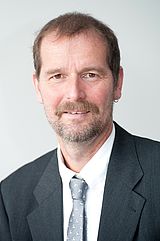
Presentation/Talk: July 10th, 2021
AI and Robots in Battery Research
Speaker: TT-Prof. Dr. Helge Stein (Helmholtz Institute Ulm)
Topic: Battery research is going through digitization and automation towards research 4.0, which enables us to find and understand new materials more quickly.
Time: 02:00-03:00 PM
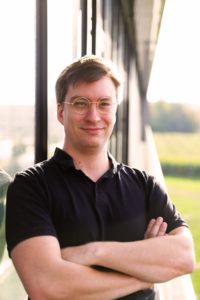
Presentation/Talk: July 11th, 2021
Sodium Ion Batteries (Presentation in English)
Speaker: Prof. Dr. Stefano Passerini (Helmholtz Institute Ulm)
Topic: Sodium batteries are an emerging technology holding the promise to be complementary to lithi-um batteries. They offer enhanced sustainability and lower costs for light-duty vehicles and stationary storage applications.
Time: 02:00-03:00 PM
With the “Freedom to Move” mission, Volvo launched a comprehensive initiative and is geared towards its own vision of the future. From the point of view of “personal”, “sustainable” and “safe”, the company develops advanced technology solutions for the mobility of the future. Within the entire life cycle of Volvo vehicles, the CO2 balance is to be reduced by 40% by 2025, and the Volvo Car Group plans to be climate neutral by 2040.
Organizer: Volvo in cooperation with agency “Do it!”, City of Ulm Department of Culture, Helmholtz Institute Ulm
Venue: Volvo Studio Ulm at Hans-und-Sophie-Scholl Platz
Time of Event: July 2nd to 11th, 2021
Opening Times: Tue – Sun from 10 AM to 9 PM
Link: Stadt Ulm – Berblinger Jubiläum
Link: Volvo Studio Ulm
08.06.2021
Berblinger Anniversary: Battery Exhibition „AKKU ALLE!?“
Opening Ceremony on June 8th, 2021
On June 8th, 2021 the Mayor of Ulm Gunter Czisch (CDU) and Deputy HIU Director Prof. Maximilian Fichtner opened the AKKU ALLE exhibition in front of the press. Before taking a short tour, Fichtner explained: “We see batteries are becoming increasingly important in various areas of life. From electromobility to solar storage systems in our homes. There are many facts and myths about battery applications. We think it is time to clarify some of these aspects that are around. ”
From Wednesday, the exhibition at Münsterplatz 25 in Ulm is open to the public. It is open daily (Tue-Sun) from 2 p.m. to 6 p.m. The last day of the exhibition is August 8th, 2021.
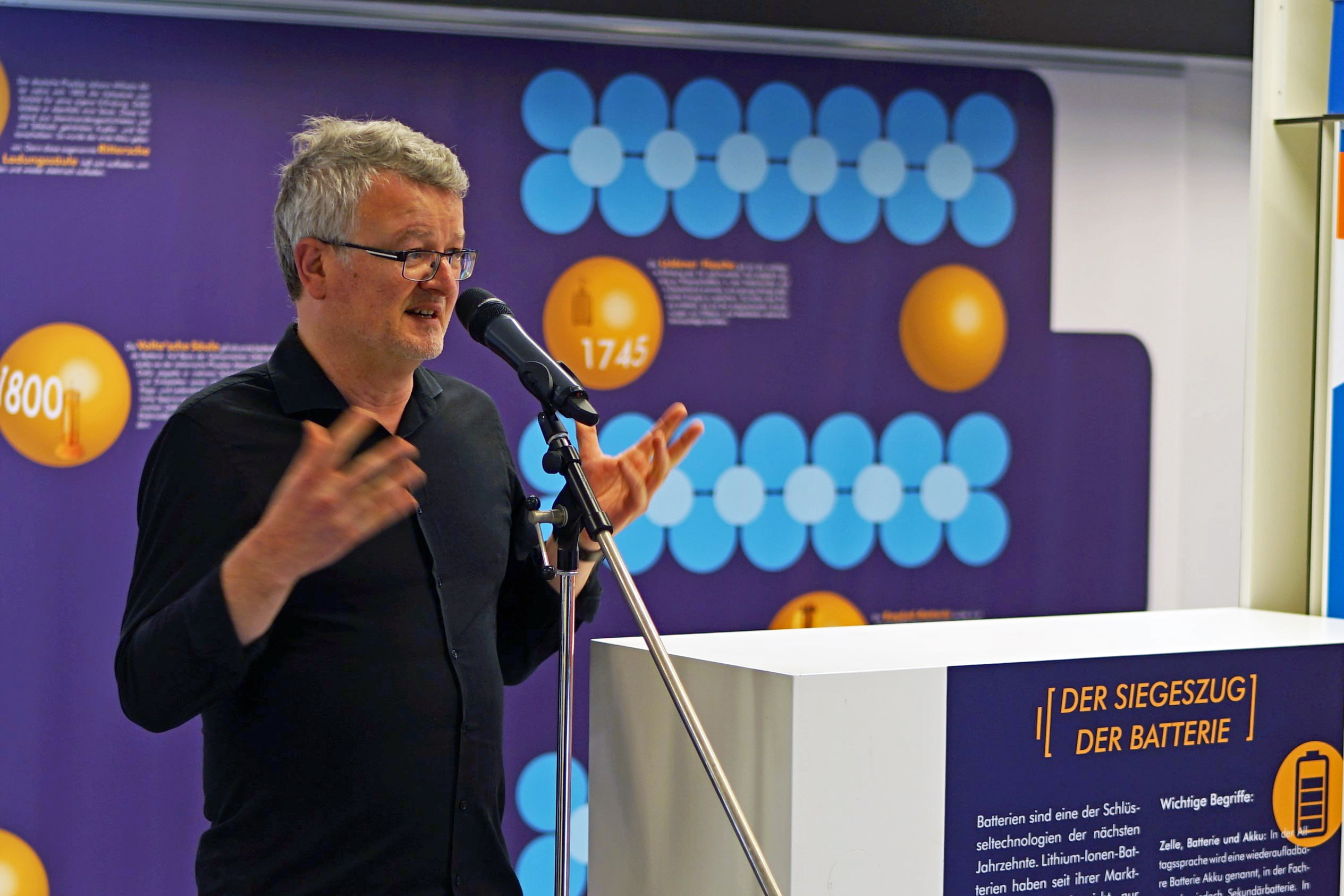
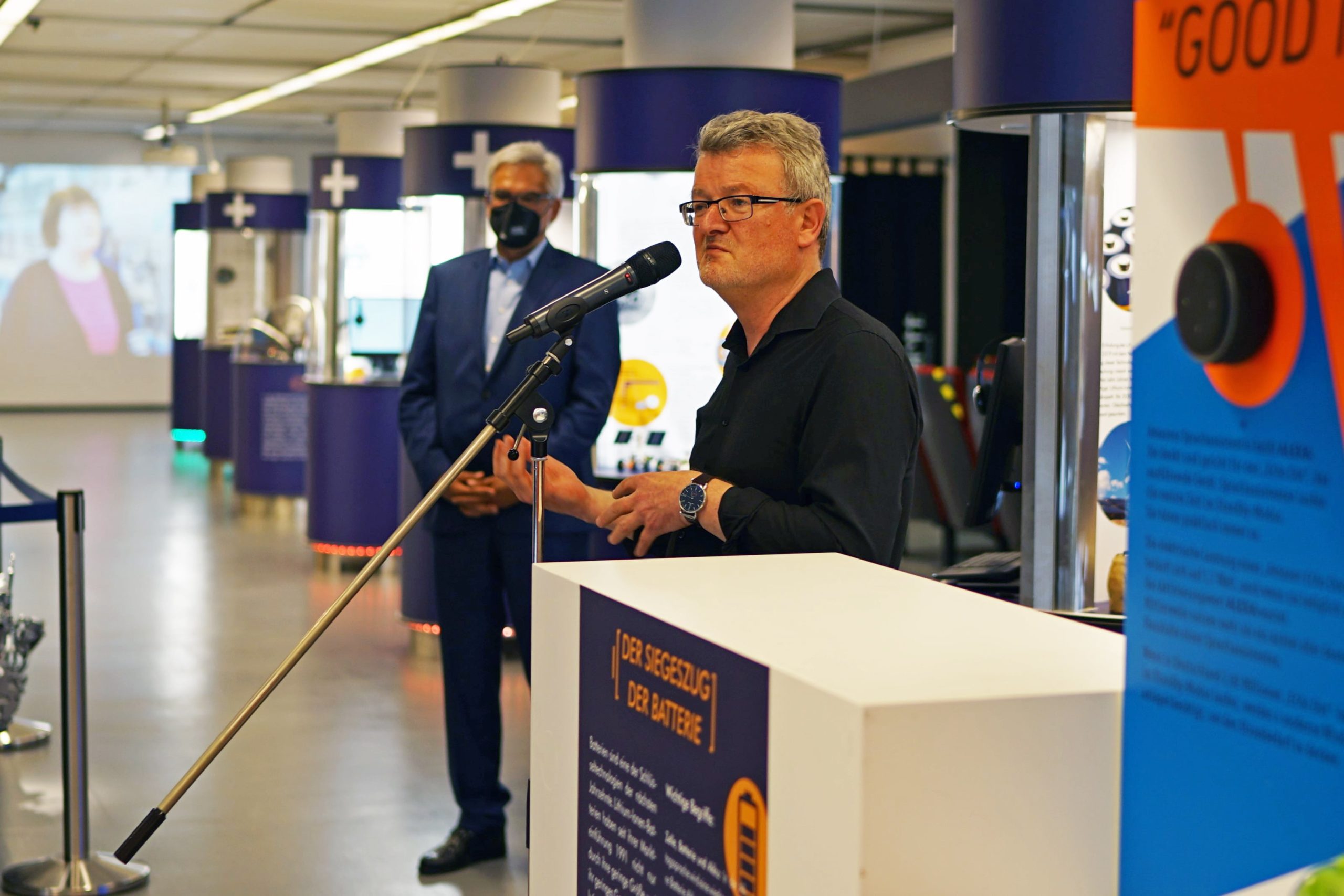
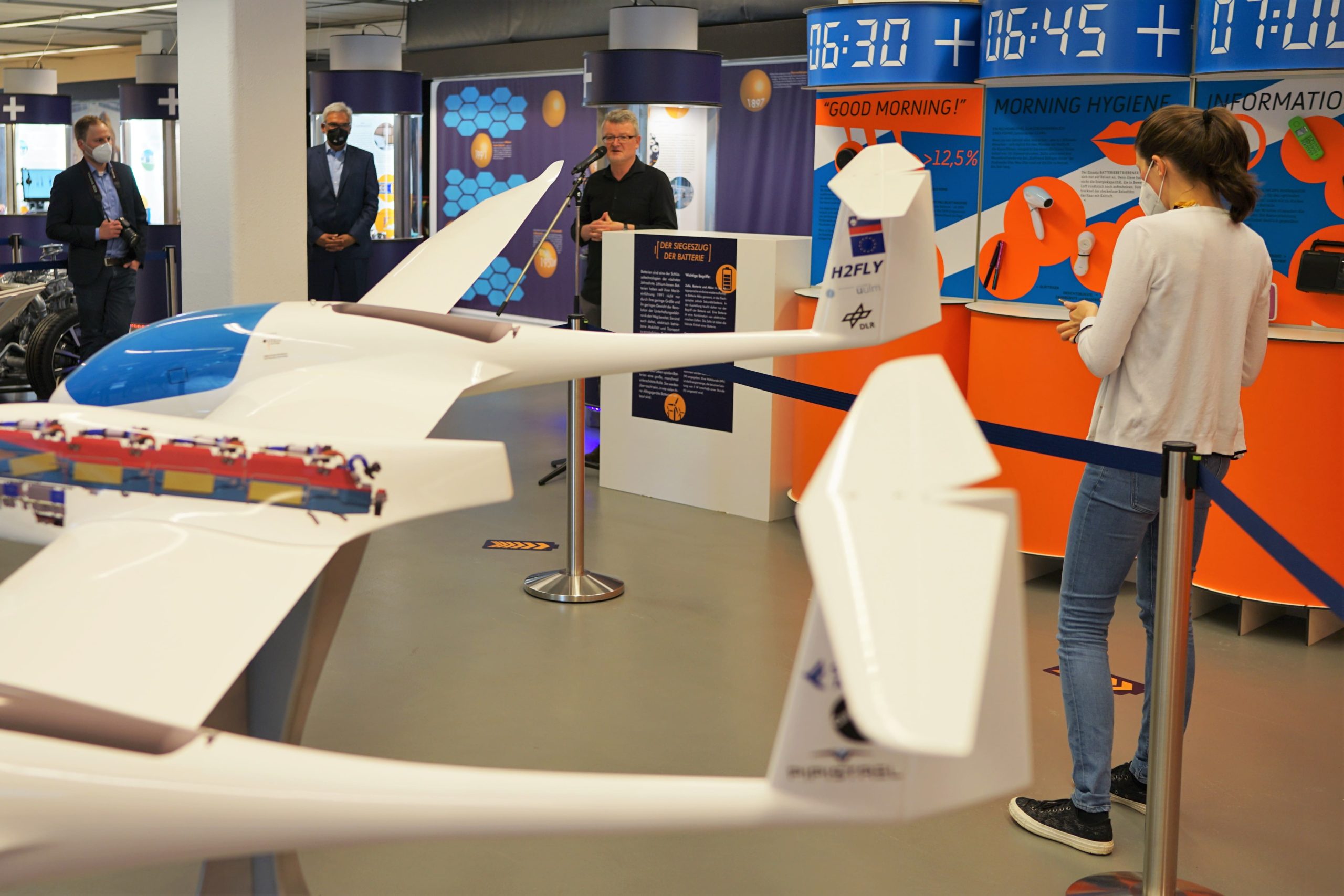
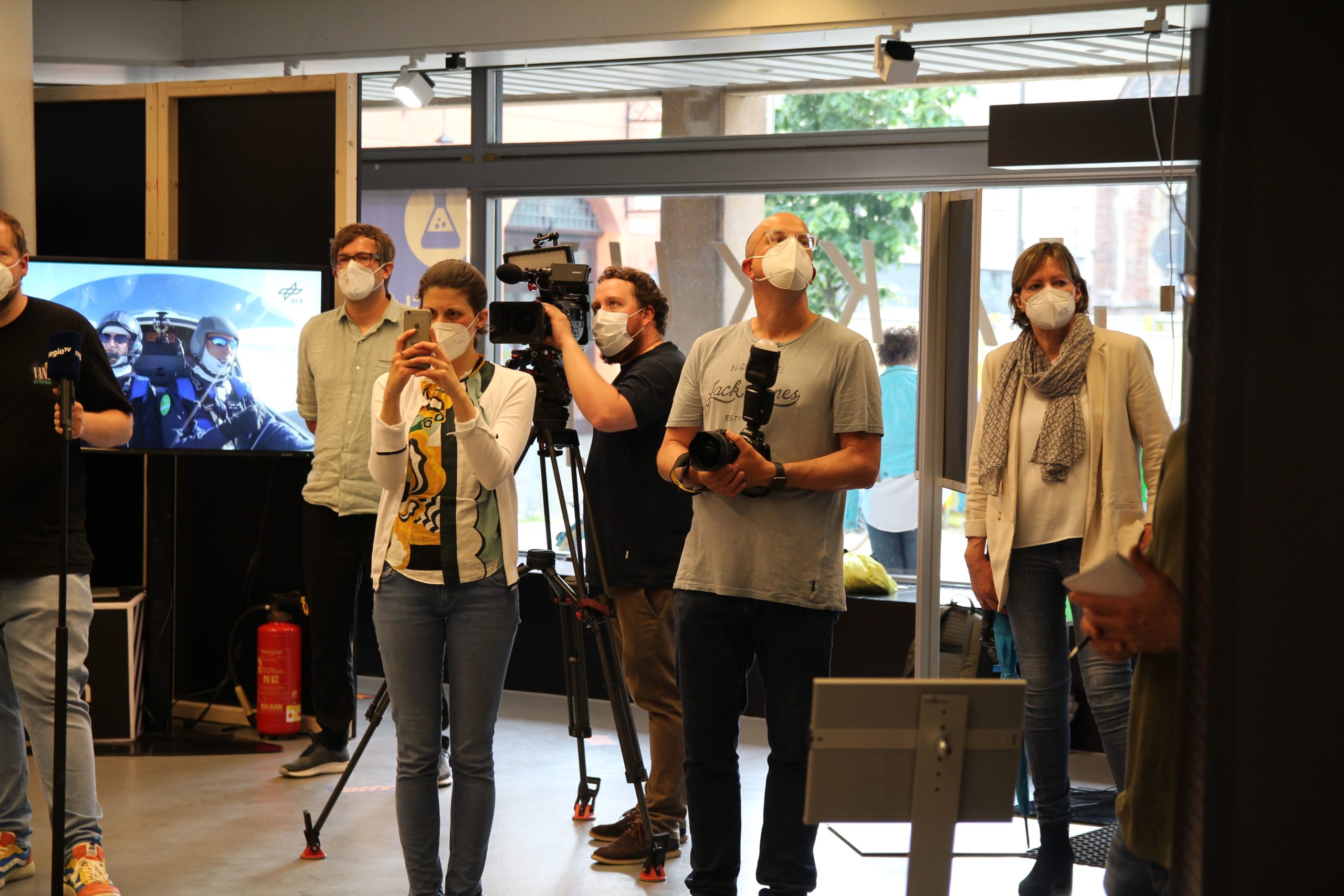
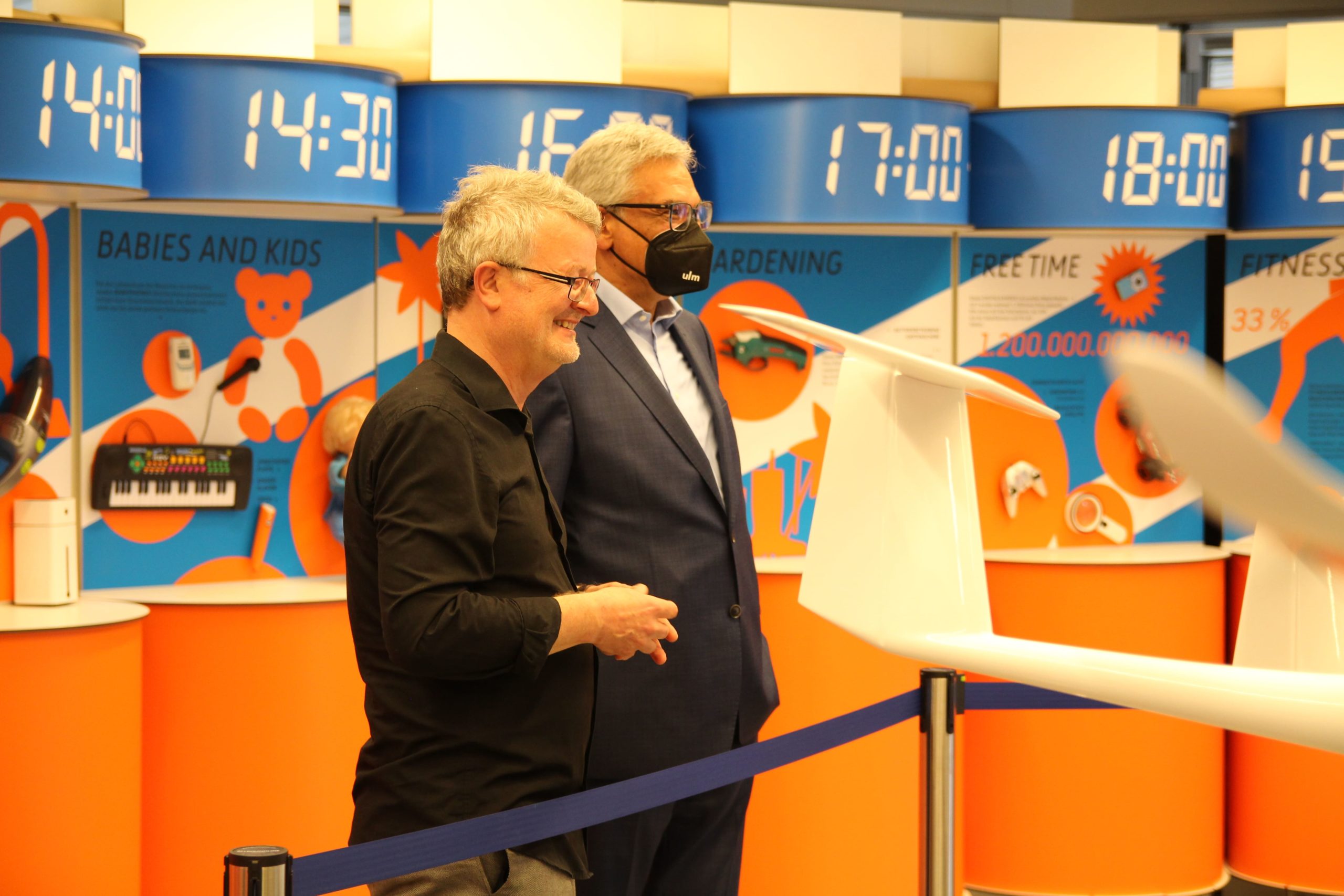
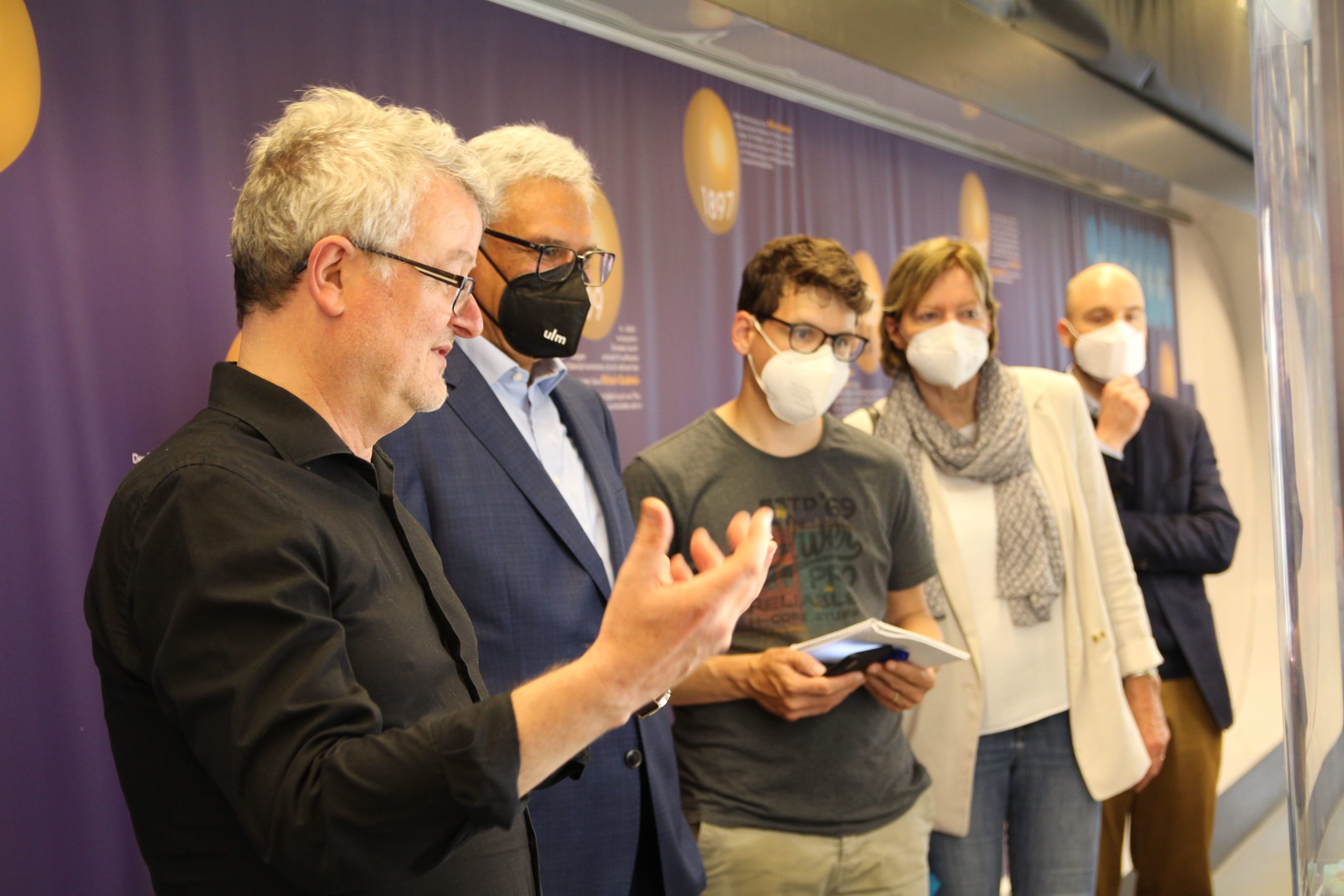
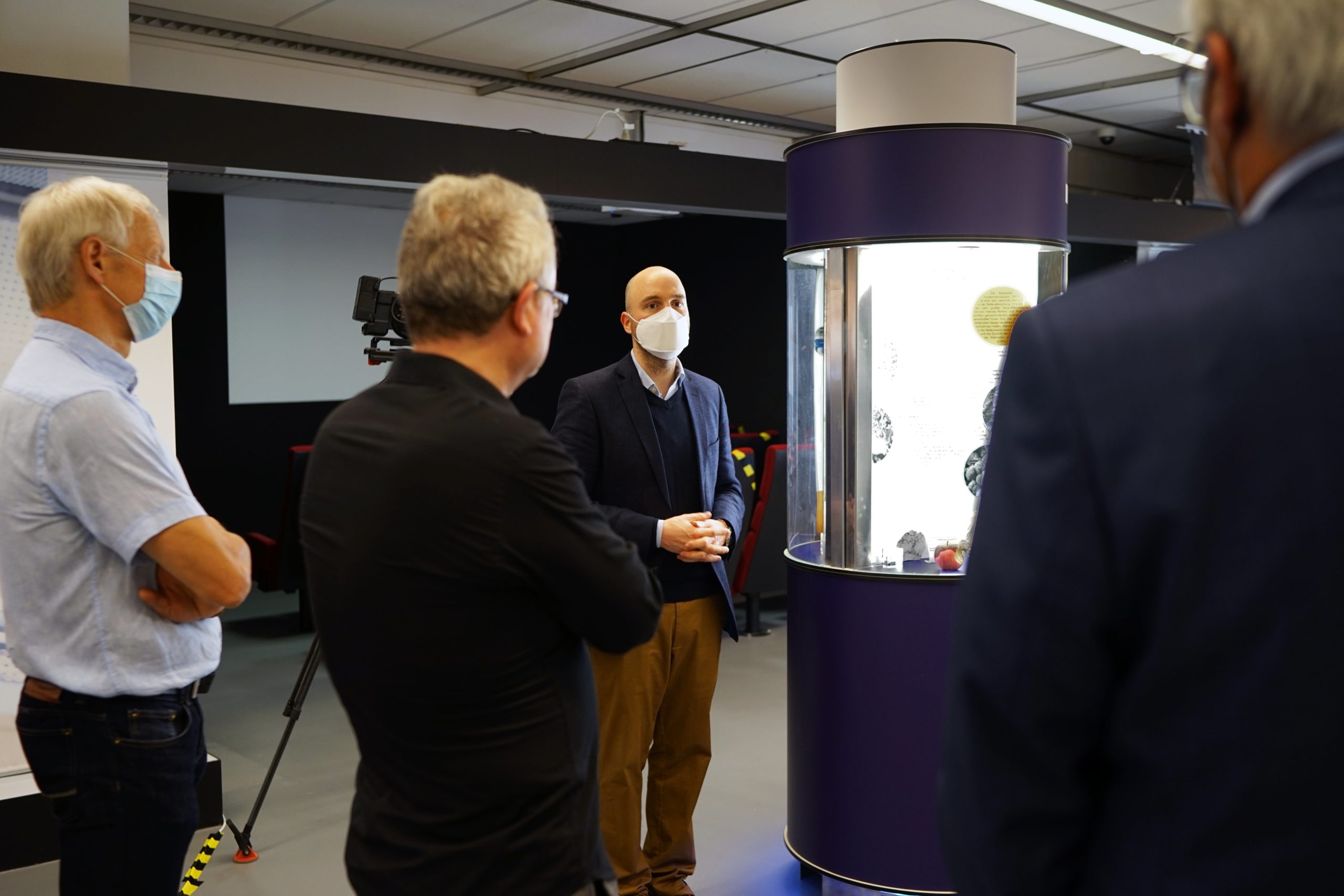
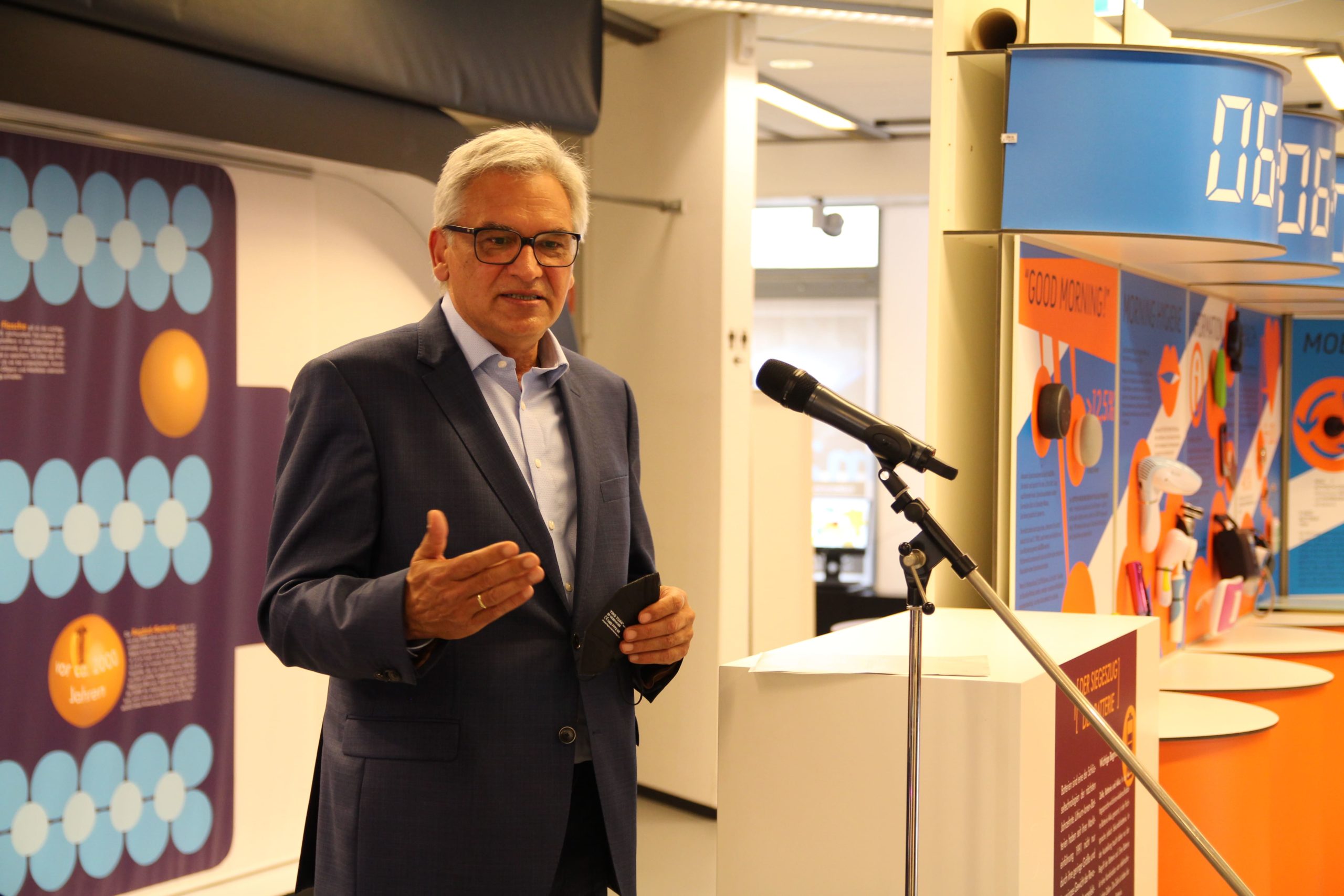
All photos of press event (08.06.2021)
We opened our battery and fuel cell exhibition in Ulm with the mayor & @MaxFichtner. “We want to inform people about the facts of these technologies. You often find in social media discussions that knowledge from 10 years ago is brought forth there,” said Maximilian Fichtner(1/2) pic.twitter.com/xPBXeRgvu6
— POLiS_Cluster (@ClusterPolis) June 9, 2021
Official press text of battery exhibition AKKU ALLE
The corona virus has changed our lives – many dreams have burst, people’s daily routines ended abruptly. At the same time, there are also winners in this crisis: automobile companies are currently conquering an undreamt-of growth market. E-cars are more popular than ever. Manufacturers of electrical appliances cannot sue either. In times of home office, demand also grows for smartphones and laptops.
Therefore, the Ulm Battery Research Institutes raise the question somewhat provocatively: “AKKU ALLE?!” (engl.: “Low Battery?”). The battery business is booming. At the same time, battery researchers in Ulm are faced with the challenge of batteries having to deliver what they promise: a climate-friendly energy supply and electromobility for all of us. This requires sustainable battery materials, some of which have yet to be invented.
These future batteries are being researched in Ulm. For the first time, the Ulm battery research institutes (Helmholtz Institute Ulm, Cluster of Excellence POLiS, research platform CELEST, German Aerospace Center, University of Ulm, Center for Solar Energy and Hydrogen Research Baden-Württemberg and Karlsruhe Institute of Technology) is jointly organizing an exhibition on sustainable energy storage and electromobility for the public in the m25 (Münsterplatz 25).
In the “AKKU ALLE” exhibition, over 100 battery-operated exhibits from everyday life can be seen. Absolute highlights of the exhibition: In a “blackout” simulation for Ulm in 2029, a six-day power failure in the Danube-Iller region will be simulated. In addition, top-class exhibits from industry and science are on display. Also included: a large-format e-car module by Volvo, a hydrogen plane, a home storage system and over 100 individual exhibits from everyday life. The visitors will be amazed where batteries are hidden nowadays.
AKKU ALLE Battery Exhibition
Where? M25, Münsterplatz 25, 89073 Ulm
When? Daily (Tue-Sun) from 2-6 p.m.; June 9th until August 8th 2021
COVID19-Restrictions? A self test kit, a double vaccination certificate („Impfpass“) or recovery certificate is your ticket into AKKU ALLE.
Entrance Fee? No.
Further Links
https://www.regio-tv.de/mediathek/video/akku-alle-ausstellung-zur-batterie-forschung-im-m25/
https://ulm.freiewaehler.de/ausstellung-akku-alle-m25-ulm/
https://berblinger.ulm.de/programm/ausstellungen/akku-alle
Press Contacts:
Sebastian Huber
City of Ulm, Cultural Department
Frauenstrasse 19, 89073 Ulm
Phone: +49 (0731) 161 4710
Email: s.huber@ulm.de
Patrick von Rosen
Helmholtz Institute Ulm (HIU)
Helmholtzstrasse 11, 89081 Ulm
Phone: +49 (0731) 50 34013
E-Mail: patrick.rosen@kit.edu
April to October 2021
Exactly 10 years ago, in 2011, the Helmholtz Institute Ulm (HIU) was founded. Since then, top international research of electrochemical cell developments of the next generation have been taking place at the HIU. Since then, the international team of around 130 scientists has been researching the further development of the fundamentals of sustainable energy storage systems for stationary and mobile use.
This year, HIU does not only celebrate its own 10th birthday. Its namesake, Hermann von Helmholtz, will also be celebrated: in 2021 he would have been 200 years old. The HIU accompanies these two occasions with a broad program of celebrations and events.
Program of events: Anniversary celebrations 10 years of HIU
April 15 to August 8, 2021 (extension may be possible)
Battery exhibition AKKU ALLE (Link, press release)
Venue: M25 exhibition, Münsterplatz 25, 89073 Ulm
Opening times: Daily from 2.00 PM to 6.00 PM., Tuesday to Sunday
02. April bis 11. Juli 2021
Scientific Battery Talks at Downtown Ulm VOLVO Forum (Link, Press Release)
Scientists from the HIU present their research, all lectures are streamed live. The lectures will be made available to a smaller audience on site.
Venue: Hans-und-Sophie-Scholl-Platz, 89073 Ulm
Times: daily lecture by a HIU researcher
September 15 to September 16, 2021
Conference for all HIU researchers from Karlsruhe and Ulm
Venue: Room N27 (Ulm University) and Helmholtz Institute Ulm, Helmholtzstrasse 11, 89081 Ulm
Times: 09.00 AM until 7.30 PM
September 17, 2021
Anniversary celebration: 10 years of HIU
Program highlight, invitation of selected, top-class guests from politics, science, industry and the media.
Venue: Helmholtz Institute Ulm, Helmholtzstrasse 11, 89081 Ulm
Time: 10.00 AM until 1.00 PM
September 18, 2021
Open Day at HIU (2021)
Public event: Get to know the HIU on the Ulm Eselsberg. Laboratory tour, food trucks, reading of Ulm murder mystery, information events.
Venue: Helmholtz Institute Ulm, Helmholtzstrasse 11, 89081 Ulm
Time: 10.00 AM until 6.00 PM
October 4th to October 5th, 2021
ZEISS Science truck at the HIU
Student information event organized by the HIU and ZEISS: Innovative laboratory equipment (microscopes) are exhibited and presented inside a walk-in truck.
Venue: Helmholtz Institute Ulm, Helmholtzstrasse 11, 89081 Ulm
Times: 10.00 AM until 6.00 PM
22.04.2021
GirlsDay 2021: Ulm University has a wide program
This year’s GirlsDay turned out to be a little different than in times before the corona pandemic. Traditionally, the GirlsDay participants were given a personal insight into the day-to-day research of a scientist and a guided tour of the laboratory. This year the organizer Dr. Sarah Pfeffer, educational assistant at ZAWiW, digitally through the program.
#GirlsDay: Awesome! Katrin from HIU did a great job in hosting a digital ? talk by @uni_ulm for future ♀️ scientists this morning. Lots of great questions & fun! Thank you for listening, girls! ??♀️ See you again in 2022! @KITKarlsruhe #Girlsday2021 https://t.co/IAvRMmGahj
— Helmholtz Institute Ulm (@HelmholtzUlm) April 22, 2021
The guided tour of the institute and the personal conversation with the researchers took place via livestream. Katrin Geng, master’s student at Ulm University answered questions from the participants and provided information about the current status of battery research.
General information about GirlsDay
Girls’ and Boys’Days are nationwide days of action that take place once a year and are intended to open up new perspectives for the future of girls and boys. The aim is to motivate girls for technical and scientific careers and boys for careers in the social, health and care sectors. On this day, the girls get to know apprenticeships and courses of study in IT, craft, natural sciences and technology, in which women have so far been rarely represented and they meet female role models in management positions. For boys, too, in addition to professional exploration in the social, educational or nursing fields, it is about reflecting on male role models, the variety of lifestyles and the question of whether the model of the male sole breadwinner is long out of date.
The Ulm University, the RKU and the Ulm Clinic have also been involved in Girls’ & amp; Boys’ Day and organize a joint introductory event. The Helmholtz Institute Ulm (HIU) also opens its doors on this day and traditionally gives an insight into their current work and research. Girls’Day and Boys’Day at Ulm University are coordinated and carried out by the Ulm 3-Generation University of the ZAWiW.
Press contacts:
Patrick von Rosen
Helmholtz-Institut Ulm (HIU)
Helmholtzstraße 11, 89081 Ulm
Telefon: 0731/5034013
E-Mail: patrick.rosen@kit.edu
https://www.girls-day.de/@/Show/universitaet-ulm/batterieforscherin-fuer-einen-tag-fuer-klasse-9-12
https://www.uni-ulm.de/einrichtungen/ulmer-3-generationen-uni/angebote/girls-boys-day/
14.05.2021
Dr. Marcel Weil, Principal Investigator at HIU and employed at the Institute for Technology Assessment and Systems Analysis at Karlsruhe Institute for Technology (KIT), has won the Jean-Sébastien Thomas Award for the best conference paper at the 15th Conference Society And Materials – EcoSD. Dr. Manuel Baumann (KIT) and some other colleagues of TU Berlin were awarded with him as well.
The paper “Potentials And Challenges Of A Circular Economy: A Systematic Review For The Use Case Of Lithium-Ion Batteries” will appear in the journal Matériaux & amp; Techniques. Anne-Laure Hettinger (Head of Global R & amp; D – Sustainability) from ArcelorMittal, sponsor of the conference, handed over the prize virtually due to the pandemic.
Congratulations to Dr. Manuel Baumann and Dr. Marcel Weil for winning the best conference paper award ?at the 15th Conference Society And Materials – EcoSD! ?https://t.co/2Dqn0t7Oeo @ITAS_KIT @ArcelorMittal #battchat pic.twitter.com/9uTF4xCq92
— POLiS_Cluster (@ClusterPolis) May 14, 2021
The conferences are an international forum for the exchange of new methods, new concepts and new topics that connect materials, products, the environment and society from different perspectives, from the social to the engineering sciences.
29.04.2021
Volkswagen presents “Way to Zero” online conference.
Deputy HIU Director Prof. Dr. Fichtner is a sought-after panel speaker.
The 2021 VW online conference “Way to Zero” was all about the carmaker’s ambitious climate protection goals: the VW Group wants to reinvent itself in the next few years with electric cars and high spendings on decarbonization. The online conference was somewhat reminiscent of a German version of American tech companies. High-end image films and scripted language revealed a lot about the new self-confidence. Announcements from shirt-sleeved managers and professional moderators ran through the ten-hour program of the “Way to Zero” conference. The day was a sales show, expert meeting and strategy talk at the same time.
One of these strategists was HIU director Prof. Dr. Maximilian Fichtner from Ulm. He appeared as a guest speaker and later as a panel talk and battery expert. In a half-hour conversation (“The Future of Battery – Batteries of the Future?”) he debated Frank Blome (Head of Battery Cell and System Business Unit, Volkswagen Group Components) and Northvolt CEO Peter Carlsson from Sweden in the online stream.
Right at the beginning of the talk, top managers Blome and Northvolt CEO Carlsson expressed their ambitious expectations that they have in common with regard to electric vehicles. Even if the costs for electric vehicles are still a bit too high, market growth in the medium term would mean that electric cars would become competitive. As a result, both speakers raised the crucial, critical product promises of electric cars: The range of electric vehicles would increase, charging times would decrease and the charging station infrastructure would soon be expanded.
At the same time, however, commitments to climate protection were in the foreground: Carlsson and Blome seemed to agree that the decarbonization of the entire automotive industry must be the desired goal. This includes not only the provision of green electricity for the operation of the vehicles, but also the production of the cars along its entire value chain: Northvolt’s Peter Carlsson reported extensively on a specially developed hydrometallurgical process by his company, which involves recovery in the course of battery recycling of the light metal lithium.
Bit excited to be plenary speaker at the Volkswagen Convention 2021 😉@KIT; @uni_ulm; @HelmholtzUlm; @CELEST_18; @2030Battery pic.twitter.com/kTYWYSt2tp
— Maximilian Fichtner (@MaxFichtner) April 29, 2021
Fichtner himself followed the conversation somewhat cautiously at first. When asked for his personal opinion on groundbreaking battery innovations lately, Fichtner said: “Most [of the new, hyped] companies refer to only one aspect of the battery, which is then exploited as a unique selling point in advertising.” Fichtner is already practiced in identifying such startups: He recommended that if there was high expectations, first wait and consider data and research results as relevant.
From Fichtner’s point of view, QuantumScape is a startup that has made this leap. At a small cell level, the company has kept its promise for solid-state batteries for the time being. “Now the company is facing the enormous challenge of scaling up these cells to a larger production level,” replied Fichtner.
At the same time, the battery community should not ignore larger battery manufacturers innovations: “With its Cell To Pack technology, CATL has changed the world of batteries. This engineering effort means that significantly more active material is now being used. These are great prospects for the future.”
When asked about specific market changes in addition to solid-state batteries, or even a revolution in well-known battery materials such as lithium iron phosphate (LiFePO4), Fichtner replied: “The revolution has already begun. Thanks to innovative cell-to-pack design, we are seeing ever greater scope for choosing different battery materials. Lithium iron phosphate was years ago already written off as battery material for electrioc vehicles. Now it is suddenly attractive again because it seems so easy to integrate. In addition, it has fantastic material properties: It is safe, sustainable and offers a long service life for batteries. ” In summary, according to Fichtner, e-car batteries could soon enable a range of well over 500 kilometers.
When it comes to hydrogen technology in the mobility sector, however, Fichtner remains skeptical. The development in this area will inevitably reach a level of saturation. The laws of thermodynamics prohibit a much rosier outlook: Even if hydrogen were to be used on a large scale in fuel cell cars one day, Fichtner sees a cost problem. He likes to be convinced of the opposite, but at the moment he remains not very euphoric: “At the moment I don’t see that Germany could produce and provide enough green hydrogen for mobility and traffic.”
Further information: Prof. Dr. Fichtner in the German battery podcast GELADEN on the subject of “lithium iron phosphate” (LiFePO4) as a battery material.
Link to the podcast: geladen.podigee.io
In the seminar of the Helmholtz Institute Ulm (HIU), outstanding international battery researchers share their scientific findings and technological inventions with scientists and students in Ulm. The seminar takes place every Tuesday at 2 pm during the lecture period.
20.04.2021
Dr. Cristina Iojoiu
LEPMI
04.05.2021
Dr. Diddo Diddens
Universität Münster
18.05.2021
Dr. Sonia Dsoke
KIT-IAM
26.05.2021
Prof. David Howey
Oxford University
01.06.2021
Prof. Venkat Viswanathan
Carnegie Mellon
15.06.2021
Prof. Philipp Adelhelm
HU Berlin
29.06.2021
PD Dr. Gunther Brunklaus
Helmholtz-Institut Münster (HIMS)
The Center for Electrochemical Energy Storage Ulm-Karlsruhe (CELEST) will host its first web-based scientific conference on May 25-26 to discuss perspectives for future batteries in Europe.
May 25-26 2020: 1st Web Conference on European perspectives on batteries of the future (BATTERY 2030+)
May 25, 13:00 – 17:10
May 26, 09:00 – 12:10
The conference will be a display of research performed in Europe in relation to the newly launched BATTERY 2030+ roadmap. Its purpose is to start the scientific discussions within the BATTERY 2030+ community as a foundation for our next phase as a large-scale research initiative.
Conference Program 25-26 May 2020
Conference Registration
The vision for BATTERY 2030+ is to invent the batteries of the future, providing European industry with disruptive technologies and a competitive edge across the full value chain. BATTERY 2030+ will pursue ultrahigh-performance, reliable, safe, sustainable and affordable batteries, by a cross-disciplinary, transformational research approach, leveraging advances in artificial intelligence, robotics, sensors and smart systems. The groundbreaking science and technology developed by BATTERY 2030+ will have an invaluable impact on the ongoing transition towards a carbon-neutral and circular economy.
CELEST is one of the most ambitious research platforms in battery research worldwide. The platform is aiming at enhancing communication and cooperation among the scientists involved and will pave the way for new, interdisciplinary collaborations. CELEST coordinates joint activities with other universities and research institutions as well as with industry in Germany and abroad.
Prof. Maximilian Fichtner, Deputy Director at the HIU, was a TV guest at the TV program “Scobel” on August 20, 2020. The topic of the scientific broadcast was “Project Electricity”. As a battery expert, Fichtner answered numerous questions about future electricity and energy storage systems and presented innovative methods in battery research.
The role of batteries in electric cars was always at the center of the discussion. The use of cobalt in batteries, which is often criticized by the public, did not go unnoticed by Fichtner: “Research anticipated early on where the journey could take us. In 2025, the crankshaft of an internal combustion engine will contain more cobalt than the battery of an electric car.” The debate about the disadvantages of toxic cobalt mining will soon be history. According to Fichtner, there are still numerous other myths about batteries. Ideas about the “limited life” of batteries no longer correspond to the current state of research.
Fichtner repeatedly cleared up common misunderstandings: “There are no rare-earth element in batteries.” Even if the extraction of lithium is not unproblematic, raw material alternatives such as the extraction and consumption of fossil fuels must always be seen in relation to lithium extraction. The situation is similar with the much-cited groundwater consumption in the Atacama Desert – the “lithium triangle” between Bolivia, Argentina and Chile. The lithium production there was repeatedly criticized because the groundwater level in this region is falling sharply. “The problem is that the groundwater level has been falling continuously since the 1960s. However, this lowering is only partially attributable to lithium mining,” says Fichtner. He explained that, for example, nearby copper mines contributed to the problem, as did the extraction of lithium deposits.
The entire broadcast in the 3sat media library
https://www.3sat.de/wissen/scobel/scobel—projekt-strom-102.html
Description of the broadcast from 08/20/2020
“Work is lively and successfully on the energy transition, gigawatts of electricity are being generated around the world from solar and wind power. But the urgent question of where to put all that energy remains unanswered. Gert Scobel discusses with his guests. You can hear from research laboratories around the world Regularly of technological breakthroughs in the development of electricity storage systems. But if you take a closer look, these are mostly only prototypes that cannot be used in everyday life. The development of electricity storage systems for the booming e-mobility is not really making any progress either. The average capacities of Batteries in e-cars, from which the possible range results, are still modest. Technological hurdles can apparently only be overcome with great difficulty. New ideas, new concepts and technological innovations for storing energy are urgently needed. “